On a list of fatalities from the Sahara bombing we find: Femma Muller, born July 11, 1908 in Sambeek, profession seamstress, address unknown. Who was Femma Muller?
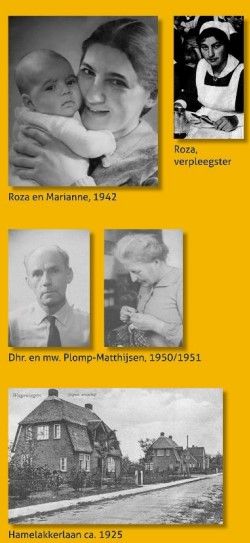
At the end of 1943 or January 1944, resistance fighter Arnold Douwes receives a note from his sister Ber: 'Do you know a place for a Jewish woman? She's the mother of that baby I was supposed to bring (she's been well cared for). She is 30 years old, a certified nurse, very handy and would like to help with the household, for example’. That 'Jewish woman' is Roza Elisabeth Zwaneweber Andriesse. Roza, born on October 2, 1912, grew up in Cuijk (NB). She attends the teacher training college in Nijmegen
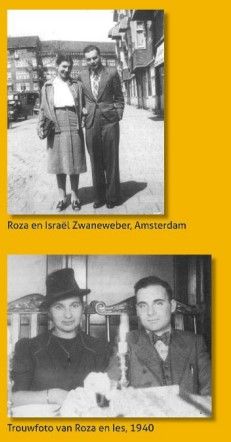
and the nursing course in Amsterdam. In 1940 she marries Israël (les) Zwaneweber. Both are liberal Jews. Their daughter Marianne is born on December 1, 1941.
Roza and Israel Zwaneweber, Amsterdam
Separated from each other
In 1942 Roza goes to Alkmaar with Marianne, where she works, amongst other things, for a general practitioner. It is not known why she lives there separately from her husband; they probably think they have a better chance of survival this way. les goes into hiding, first in Amsterdam and later in Vianen, near Cuijk. Roza's
parents are also hiding there. Ies dies of a brain haemorrhage in July 1943 at his hiding place.
The Plomp-Matthijsen family
Cees Plomp and Diet Plomp-Matthijsen live at 2e Buurtseweg in Wageningen. Cees is head of the Buurtse School and active in the resistance. He is a careful man, he works alone and never writes down his activities. He provides false identity cards and can forge signatures perfectly. Diet Plomp would like to take in a Jewish child in order to save at least one human life. The couple comes into contact with Roza through friends in Alkmaar. Roza knows that with non-Jews Marianne has a better
chance of surviving the war. In March 1943 Marianne comes to
Wageningen. She is then 1 year and 4 months old.
Roza is now also in hiding in Alkmaar. There she anxiously awaits an opportunity to find a hiding place near her daughter. When Arnold Douwes receives the note from his sister, he arranges an address and in March 1944 he takes Roza to Wageningen by train. She comes to stay with the Leendertz-Hoog family at
Hamelakkerlaan 1 (now 17), as a domestic help. During the occupation, the Leendertz family is known for being extremely hospitable, Arnold Douwes also visits regularly.