Who were these heroes?
The friends belong to the resistance group 'The Wageningse Orde Dienst'. All four survive the occupation.
Jan van Roekel (1920-1987)
On the day of the theft, Jan is 22 years old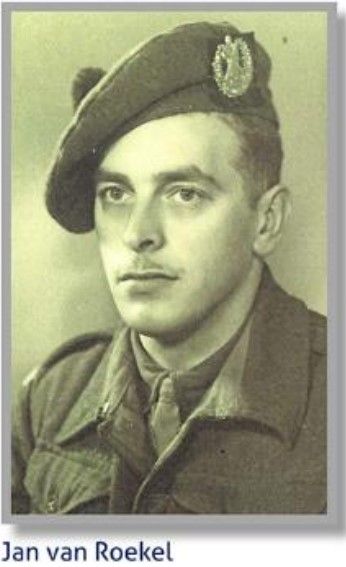
Jan still lives in his birthplace the Wolfswaard in the Wageningen floodplains. Here Jewish people are in hiding, there is a secret radio transmitter and the house serves as the headquarters and base of the resistance group ‘The Wageningse Orde Dienst’ (OD). Jan is commander of the OD since 1941. Its relatively remote location
makes it an ideal place for the resistance. From this house the raid of the Wageningen population register is organized.
Jan is a member of the resistance throughout the war. In September 1944, during the battle of Arnhem, allies arrive at the Wolfswaard. Jan, with the help of friends, transports these people in a rowing boat to the Betuwe. In 7 crossings they bring 69 soldiers to Allied territory. In October 1944, Wageningen is evacuated for the second time. Jan joins the Allies in the Betuwe. Eventually he becomes an officer in the Scottish military. In the May days of 1945 he returns to Wageningen. In 1947, Jan van Roekel receives the Medal of Freedom from the American government and the Order of the British Empire from Great Britain for his assistance to the Allied military.
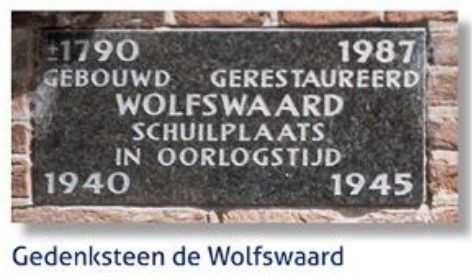
Jan emigrates to New Zealand. In 1981 he visits the Wolfswaard for the last time. He becomes seriously ill and does not live to see the unveiling of the memorial stone on the facade of the Wolfswaard. 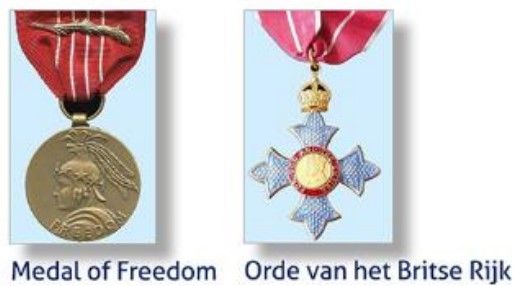
Bob (Martinus) Mebius (1917-1973)
On the day of the theft, Bob is 25 years old 
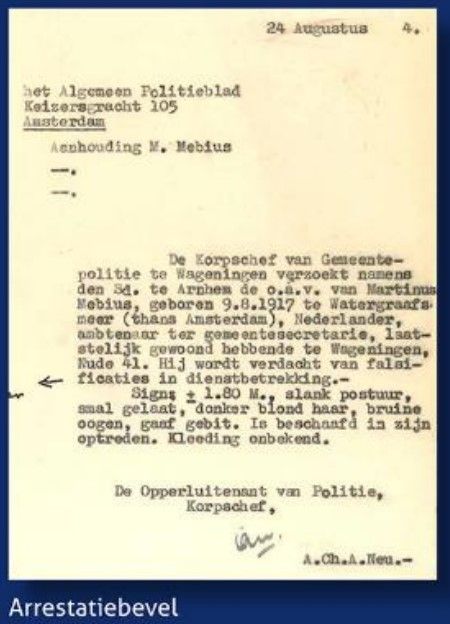
After graduating from high school, Bob finds temporary work as a volunteer at the town clerk's office in Wageningen. In the course of the war he becomes involved in the resistance. As a municipal civil servant, he falsifies data on personal record cards that are kept at the Town Hall, so that they correspond with the data on forged identity cards. After the town clerk Bergsma has been informed and approves of Bob's activities, he can go about his business even more easily.
For example, he deletes records of returned prisoners of war, preventing them from receiving a call for employment in Germany.In the end things go wrong and Bob is wanted by the Germans. Jan van Roekel sees to it that Bob is put across the river Nederrijn.
After the liberation, Bob Mebius returns to Wageningen. Later he gets
a good job abroad. Until his death in 1973, he regularly visits Wageningen on the 4th of May for the commemoration of the dead. He is remembered by many
as a good-natured and loyal wartime worker