Wageningen 1940-'45
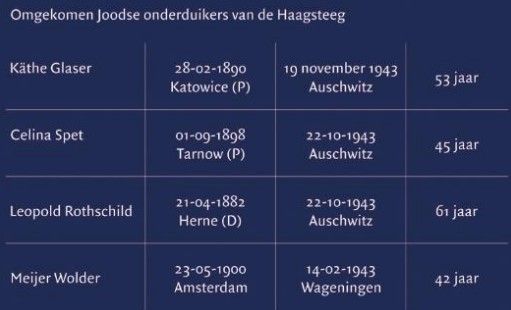
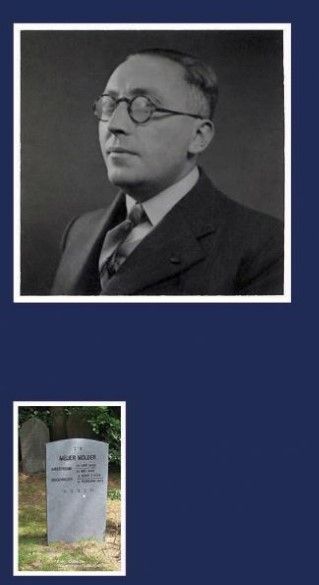
In 1942 the persecution of the Jews and the deportation to Germany continued unabated. More and more Jews went into hiding. At home we had an 'uncle' who would come to live with us for a while: Mr. Wolder, a tobacco salesman from Amsterdam. Clients of his were director Van Schuppen of the cigar factory Schimmelpenninck in the Stationsstraat and director Baars from the Viktor Hugo cigar factory in the Nude. My father frequently contacted Mr. Baars for his
resistance work and that is how Mr. Wolder came to live with us. After a while, Mr. Wolder couldn’t handle life anymore: he made several attempts to end it. For example, he tried cutting his veins with the glass of a painting and he took a whole tube of sleeping pills which rendered him unconscious for four days. In the end he
succeeded: a lady from Amsterdam who often visited him found him after he had hung himself. Members of the resistance buried him behind the cigar factory.
The Jewish Heritage Wageningen Foundation gave Mr. Wolder this
tombstone in 2015, lest he be forgotten.
Soon new people arrived looking for a place to hide. First two Jewish ladies from Amsterdam. These German teachers had already fled to the Netherlands in 1933. Also, Mr. and Mrs. Roth, owners of a butcher shop in Germany, had fled. Next, a Jewish engaged couple arrived and Bert Polak, the son of professor Polak
of the Agricultural College in Wageningen. With twelve people, the house was crowded, so it was quite a challenge for my parents to organise everything.
Mid 1943, in the evening and at night, whole lines of allied bombers crossed the Rhine to bomb steel mills in Germany. One of the bombers made an emergency landing a few meters past café Quint. Jaap and I ran to the location. When we got there the airmen were climbing out of the plane and they leaned over a map on the ground. They were looking for the way to Nijkerk, where the seaplane from
England would come to pick them up. In the course of the day a whole group of German soldiers came looking for them. Our Jewish people in hiding were scared and hid under the potato leaves. By evening the airmen were found by the German soldiers and the plane was disassembled.
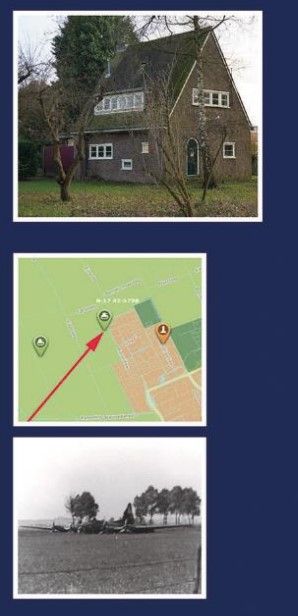
One day I came home and there was a panicky atmosphere: a courier from Amsterdam had told us that the Sicherheitsdienst (SD) had intercepted lists with the names and addresses of our people in hiding. After previous alarm messages nothing had happened. This time my father thought the threat was serious, but the people in hiding didn't feel the need to leave. My father took his bike to the
Rijkstuin, so that it could be used to flee if required. In the afternoon most people in hiding went to rest in their rooms after dinner. That turned out to be a fatal error. One afternoon two detectives sneaked up to the house from the front and the back which prevented the people in hiding from escaping. Mrs. Roth had sprained her foot and could not immediately go with them, she would be picked up later. But she fled to the Binnenveld where Mr. Roosenboom picked her up from Ede. She survived the war. Bert Polak got away by saying that he was our cousin and staying with us. His name was not on the list of the SD. Bert fled via our
neighbour to the resistance and was housed in a new hiding place.
City of Liberation